When people think about nurse anesthetists, you’re probably picture a hospital room and controlled environments. Well, the story we’re about to tell you will shatter all of those preconceived notions.
On this episode of Beyond the Mask, we welcome in Lt. Col Laura Wiggins, CRNA, who is recently retired after serving 25 years in the military. During her final year of service, she was involved in a secret mission in the Middle East to provide medical care, which also involved other CRNAs. The work that was done that day in 2017 eventually led to a peace deal in 2020, which makes the story even more remarkable.
This has all of the pieces you’d find in a Hollywood blockbuster and it’s incredible to hear about the impact CRNAs have all across the world. Good luck containing your pride after hearing everything that Wiggins went through during this operation and the care that was provided to some very powerful people.
So as you get started, keep an ear out for these topics:
Her background in the military and how CRNAs played a key role.
How the mission transpired
Flying into Yemen in the middle of the night without much idea of the mission
When she saw a CRNA patch on someone’s chest in Yemen
The weapons and personnel that were protecting their flight
A walking bloodline
An inverted take-off while trying to give blood and chest compressions
The details on the mission and why they were called to duty
How this mission led to a peace accord signed in November 2020
A future in politics?
Check it out in the interview at the top of the page and use the timestamps to help you navigate through the many topics we discussed.
[3:14] – Background on our guest
[6:23] – How the mission unfolded
[9:50] – No time to sleep
[14:02] – Flying into Yemen
[15:49] – CRNA patch
[17:24] – Dealing with Injured patients
[19:00] – Media knew the story
[20:39] – A walking bloodline
[21:36] – Combat take-off
[22:51] – The reason for the mission
[24:18] – How this affected the peace accord
[27:14] – Running for office
[29:24] – Final thoughts from Laura
Click the button below to download the Certification of Completion to get Class B CE Credit
Many issues are facing our country right now and nurses will play a key role in helping communities move forward. As the most trusted profession, nursing should embrace that position and that’s what many leaders are trying to do. ANA President Ernest Grant, PhD, RN, FAAN, joins us on this episode to share his view on what he feels are priorities right now, how nurses can impact the future, and why representation is still crucial for the profession.
Before we share anything, please note that this is an emotional episode. Not only was the journey to a DNP a long and arduous one for Sharon with plenty of highs and lows that we’ll discuss, but we begin the show with heartbreaking news about Sharon’s granddaughter, Emma Kate. It’s tough to discuss but it’s important for the healing process and we appreciate everyone for the support along the way.
On this episode, we’re going back to a previous conversation with the three women behind the Scrub Caps & Sippy Cups podcast. This trio does great work for mothers in our profession so we wanted to spotlight them once again on the show. Plus, a lot has changed for them since we talked in early 2020.
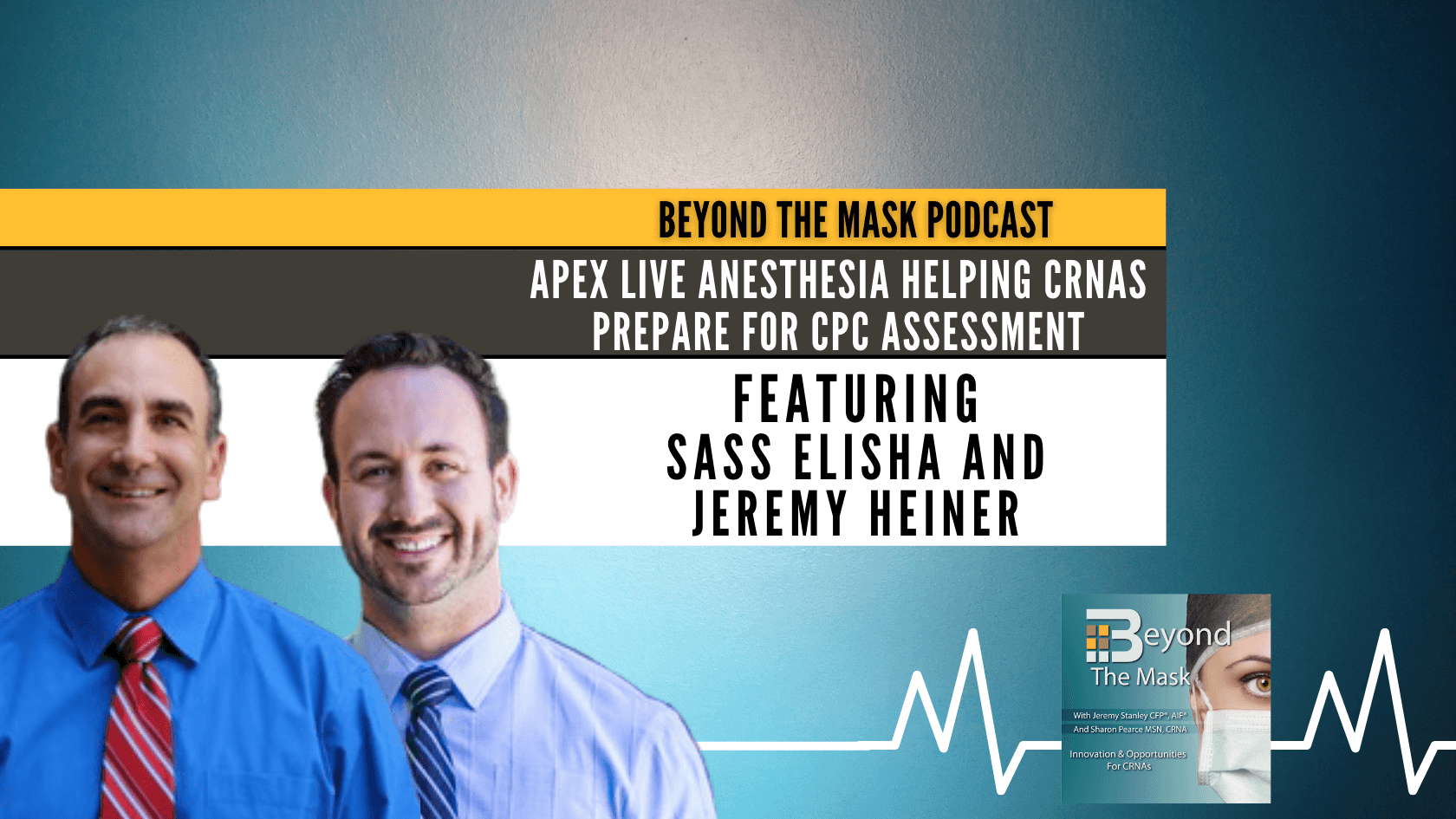
Testing is never a relaxing experience and that’s why the upcoming CPC Assessment has created some anxiety for CRNAs. Thankfully, the duo behind APEX Live is working hard to help educate and prepare CRNAs through events, podcasting, and teaching. Jeremy Heiner EdD, CRNA and Sass Elisha EdD, CRNA, FAAN join us today to tell us more about the work they’re doing and then take us through some sample questions that might be found on the assessment.
No matter how closely you follow standard of care, mistakes can be made in the operating room. CRNAs often get named in claims, even if they did everything right, so it’s important to be aware of how this happens. Marjorie Everson, PhD, CRNA, has been studying closed claims and there are plenty of findings that she hopes can help CRNAs and SRNAs in the future.
Home values continue to rise all across the country and it has many people thinking back to the crash of 2008. Are there parallels or is this time different? Josh Mettle of NEO Home Loans joins the show to share his data and insight into the real estate market. Plus, he’ll tell us how he helps CRNAs secure a mortgage with a 1099 income.
The rate of suicides among our veteran population continues to rise and the number is probably higher than most people realize. The good news is people are leveraging incredible new data to improve support and care for those that need it most. Kevin Driscoll, DNP, MSN, CRNA, is the only CRNA certified in these geographic information systems (GIS) and he joins us today to share his passion for data, how it’s being used to serve veterans, and the other possibilities that could come from GIS.
There’s a relatively new concept in the healthcare industry that many of its professionals are facing and might not even realize it. The ‘Second Victim’ phenomenon hasn’t always been well-known but more and more people are acknowledging this silent epidemic that frontline workers like CRNAs are dealing with every day. Robyn Finney, APRN, CRNA, DNAP has created a peer support program called HELP – Healing Emotional Lives of Peers – that is working diligently to improve the lives of anesthesia providers, and she joins the show today to help us better understand this phenomenon and how it’s affecting our industry.
A significant number of people in our country are dealing with the effects of PTSD and it often goes overlooked or ignored. With the amount of added pressure CRNAs and SRNAs have due to the job, it shouldn’t be a surprise that suicides happen too often among our peers. So how do you identify issues and help those you think might be struggling? We’ve asked mental health experts Jerry Hogan, DNSc, CRNA and Chuck Griffis, PhD, CRNA to join the show to help us all learn more about the struggles people are facing and what can be done to prevent suicides in the future.
Generational differences can often be the source of disagreements and misunderstandings. It happens in every profession and nurse anesthesia is no different. Erin Martin, CRNA, DNP, is the Program Director at the Mayo Nurse Anesthesia Program and has an incredible grasp on how and why each generation is different. She joins today to provide a thorough examination of these unique communication characteristics and how we can use them to improve education.


(855) 304-3748
Email Us
Schedule a Call